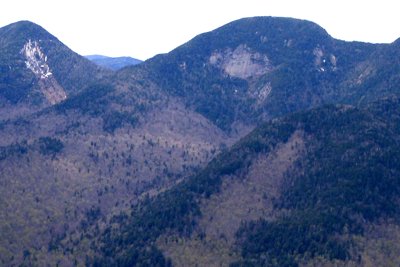
Lower Wolfjaw Mountain stands at 4,175 feet along the Great Range, the dramatic ridgeline linking some of the Adirondacks' most challenging High Peaks. The name, attributed to landscape painter Alexander Helwig Wyant around 1870, comes from the paired silhouette that Lower and Upper Wolfjaw present from certain angles, their skyline suggesting the open jaws of a wolf. Trail guide Ed Phelps made the first recorded ascent in 1875, and the mountain has been a fixture of Adirondack peak-bagging ever since as one of the original 46 High Peaks.
Two main approaches reach the summit. From the Garden parking lot via the Phelps and Range Trails, the round trip runs about 10.9 miles with roughly 2,880 feet of gain; from the Adirondack Mountain Reserve trailhead, the W.A. White Trail offers a somewhat shorter but equally steep alternative through the wild Ausable River drainage. Either way, the final pitch from the notch between the two Wolfjaws is the crux: a sustained, rocky climb that demands care on wet or icy days. Most parties pair Lower Wolfjaw with Upper Wolfjaw, adding modest mileage for a second 46er.
The summit is largely forested, with limited views from a handful of rocky perches near the top. Lower Wolfjaw serves as the southeastern anchor of the Great Range; the full traverse onward through Armstrong, Gothics, and Saddleback is one of the signature long days in the Adirondacks. Winter ascents require crampons and an ice axe, particularly on the steep slopes above the notch.